
The Victorian Monstrosity Problem
When I was a small boy, already showing an unhealthy interest in buildings, my mum had a phrase she liked to use: Victorian monstrosity. Anything ornate. Anything brick and confident and over a hundred years old. She wasn't unusual. Everyone said it. And it gave a whole generation permission to tear those buildings down without much soul searching.
Worth asking, then: what did that attitude actually cost us? And why is the generation that held it now the loudest voice against building anything at all?
What we threw away
Take the British Library at St Pancras, the last great hand made public building in this country. I was lucky enough to know it at both ends of its story. While I was studying at The Bartlett I was taken to visit the old reading room at the British Museum, by then absolutely inaccessible to non readers, a space that had been kept in near silence for hundreds of years. They were really, really serious about that quiet. Federal crime kind of serious. Then the new building opened, and I became one of its first readers. A privilege then. A greater one now.
Because here's the thing about the new Library. When it opened it was derided as ugly, over budget, late. An HS2 scale scandal in its day. But have you ever actually looked at one of its handrails? Take sixty seconds. The brass, the leather, the way every junction is designed rather than slapped together by a trade on site. Every inch of that building is like that, and it is vast. The furniture, the marble, all of it conceived with something like a 250 year design life, in an era when most buildings get twenty five.
Which is, of course, exactly what the Victorians did. With every public building. Town halls, libraries, schools, railway stations, swimming baths, all designed to age gracefully through centuries of oiks sitting on the marble. Built by people who simply assumed the public realm deserved permanence.
And we tore them down. Not because they were failing. Because they were unfashionable. The comprehensive redevelopment of British town centres in the sixties and seventies swept away streets of robust, adaptable Victorian fabric and replaced it with shopping precincts, ring roads and system built housing, much of which has already been demolished in turn, having lasted barely a generation. The buildings it replaced would still be standing. Still be useful. Still be loved, probably.
The same people, the opposite problem
Here's the uncomfortable part. The generation that presided over all that, that called craftsmanship monstrous and concrete progressive, is now the demographic backbone of opposition to new housing.
You know the pattern if you've ever worked in planning. Objections to schemes on land nobody can see from any window. Campaigns to protect views across car parks. A reflexive hostility to density, to height, to change of any kind. The cohort that decimated our architectural heritage now styles itself as its guardian, defending not the great buildings, which are mostly gone, but the status quo. Which happens to include their own under occupied houses, in exactly the places younger people need homes.
Will they admit the first part? They'll deny it, one hundred percent. Nobody remembers being the person who wanted the town hall flattened. But the record is in the rubble, and in the dismal retail boxes that took its place.
Why this matters now
The housing crisis has many causes, but this generational double act is one of them. First, destroy the adaptable urban fabric that could have been converted, extended, densified. Then spend forty years blocking its replacement, while sitting on the housing scarcity that makes you rich.
The lesson of the British Library, and of the whole Victorian public realm before it, is that good building wins in the end. The Library went from national embarrassment to Grade I listed in under thirty years. People sit on its marble, lean on its brass, and the building just absorbs it, because somebody designed it to. For 250 years of exactly that.
We should build like that again. We should build a lot. And the least useful voice in that conversation belongs to the people who demolished the last lot...
I like to think my mum would concede the point. Eventually.
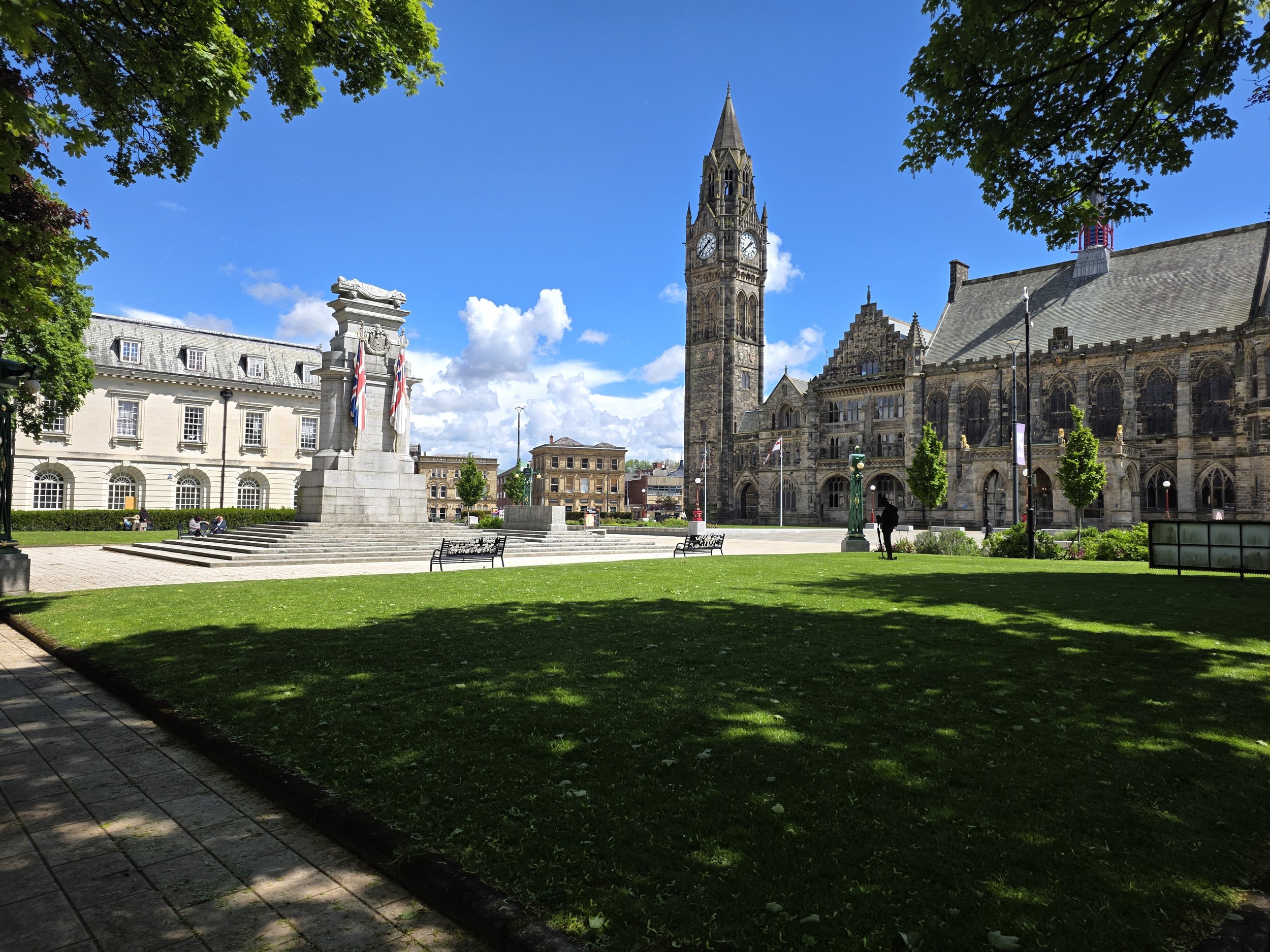
Rochdale Town Hall
Rochdale Town Hall, reopened in 2024 after a four year, £20m restoration. Designed by William Crossland and completed in 1871, it's a building Historic England rates as rivalled in importance only by the Palace of Westminster, and it had been left to slide toward the unfit and unloved. Conservation architects Donald Insall Associates led the revival, stripping a century of grime off the Great Hall's painted ceiling, saving the stained glass, opening up rooms the public had never seen, and threading in the lifts and services a working civic building needs. Proof that the answer to a tired Victorian masterpiece was never the wrecking ball, and that Rochdale, busy regenerating the whole town centre around it, worked that out.
Photo: Phil Cooper, 2026
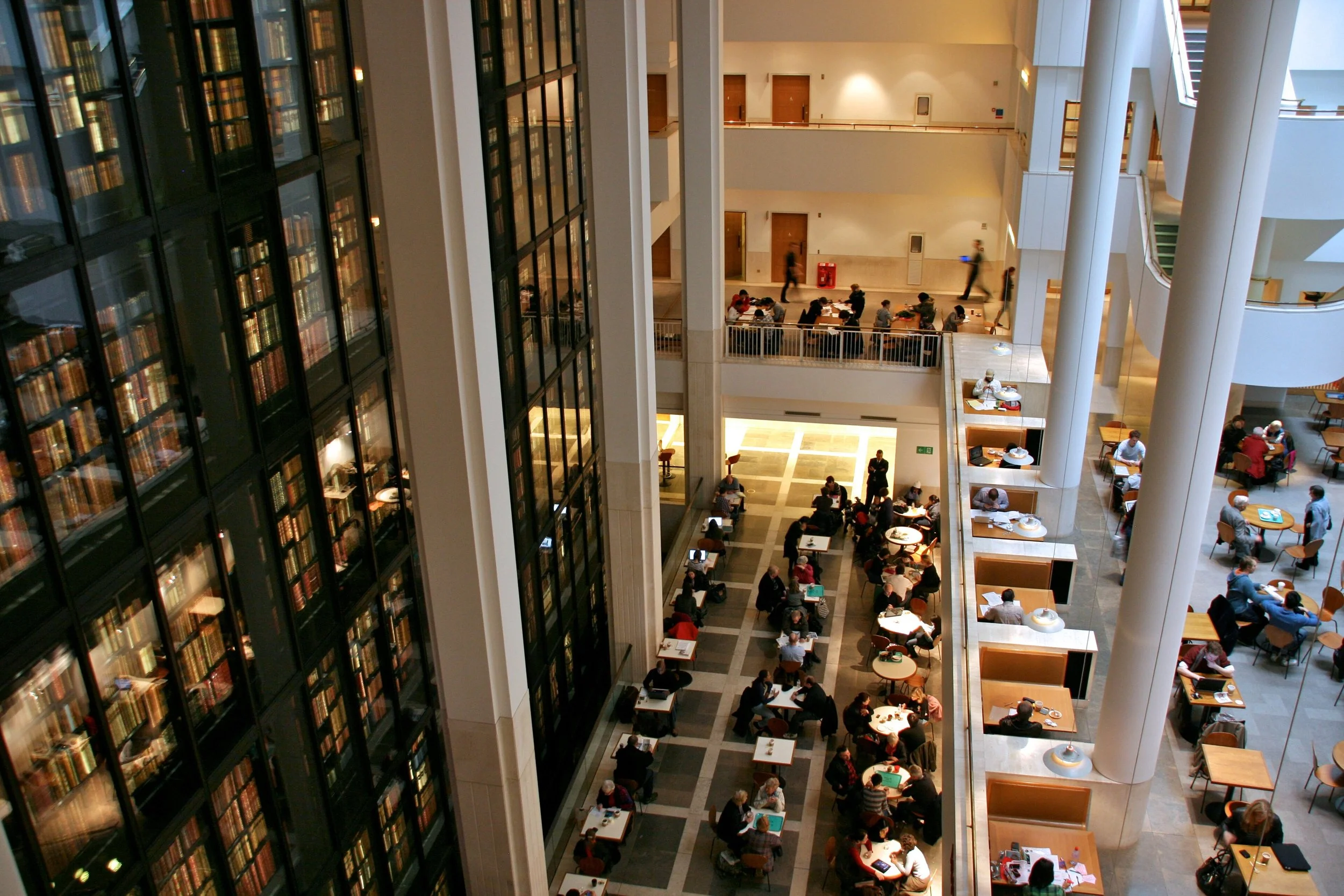
The King's Library Tower, British Library
The King's Library Tower at the heart of the British Library, with readers and the café spread around its base. This six storey glass and bronze tower holds George III's library, some 65,000 volumes given to the nation by George IV in 1823 and moved here when the collection left the British Museum. Colin St John Wilson designed the tower specially, along with the rest of the building, over a campaign he called his thirty year war, and it opened in 1998 as the largest public building Britain put up in the entire twentieth century. Prince Charles compared the reading room to an academy for the secret police while it was going up. Look at it now and ask who was right.
Photo: Mike Peel via Wikimedia Commons, licensed under [CC BY-SA 4.0]
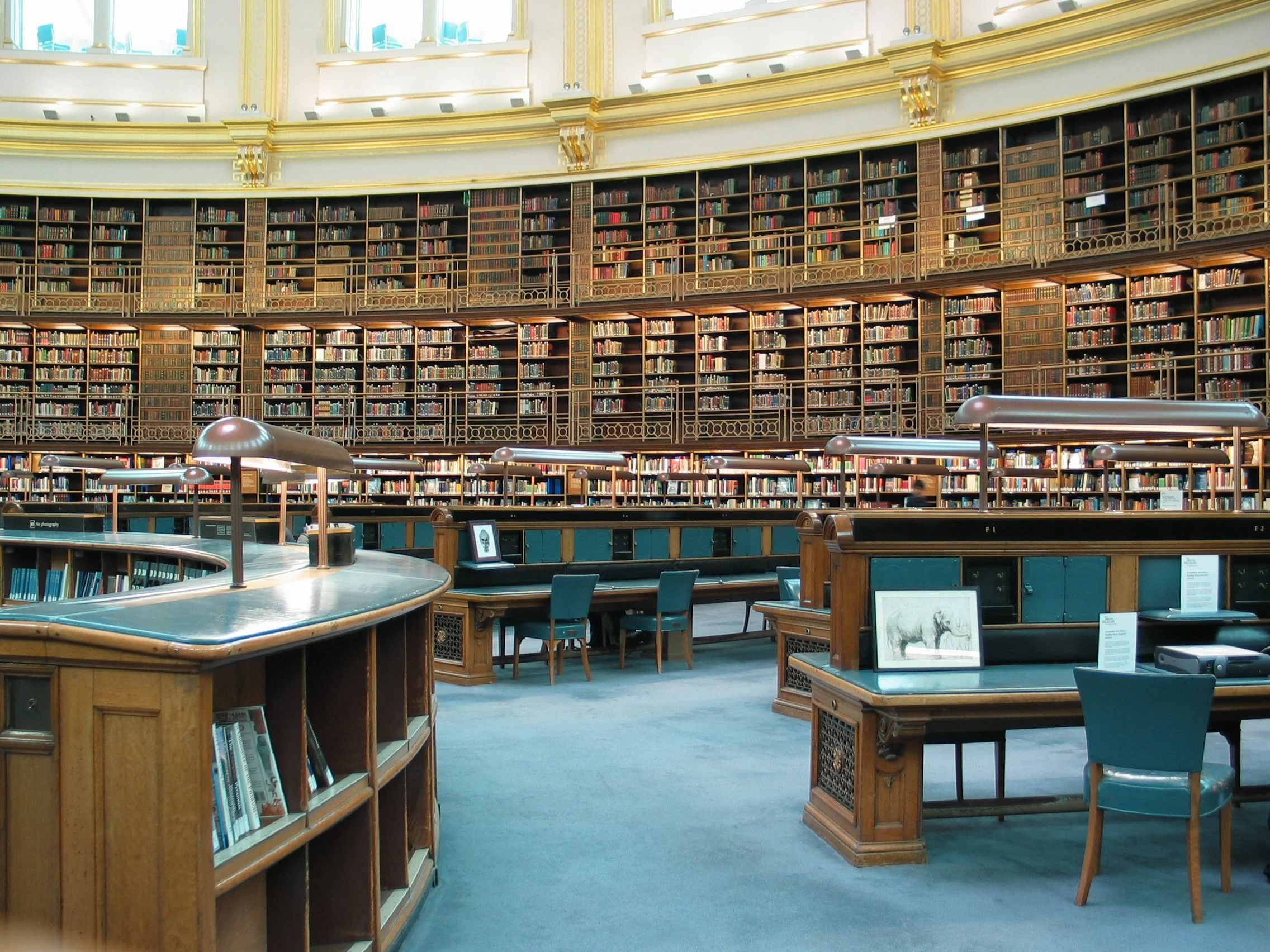
The Round Reading Room, British Museum
The Round Reading Room at the British Museum, before the British Library decamped to St Pancras. Designed by Sydney Smirke and opened in 1857, this is the federal crime level of quiet we mentioned, a 140 foot dome inspired by the Pantheon, technically dazzling for its day, where Marx, Wilde and Bram Stoker all sat and worked. The library department stayed put until 1997, when it moved to the new British Library, and that departure freed the surrounding courtyard for Norman Foster's Great Court, opened in 2000. The room itself survives in its original form, repurposed over the years, but no longer the silent engine of British scholarship it was when I sat in it.
Photo: Robert Downes via Wikimedia Commons, licensed under [CC BY-SA 4.0]
Hope Architects works on residential and planning projects across the country. Navigating an objection, or trying to build something worth keeping? Get in touch.