
If I Were Andy
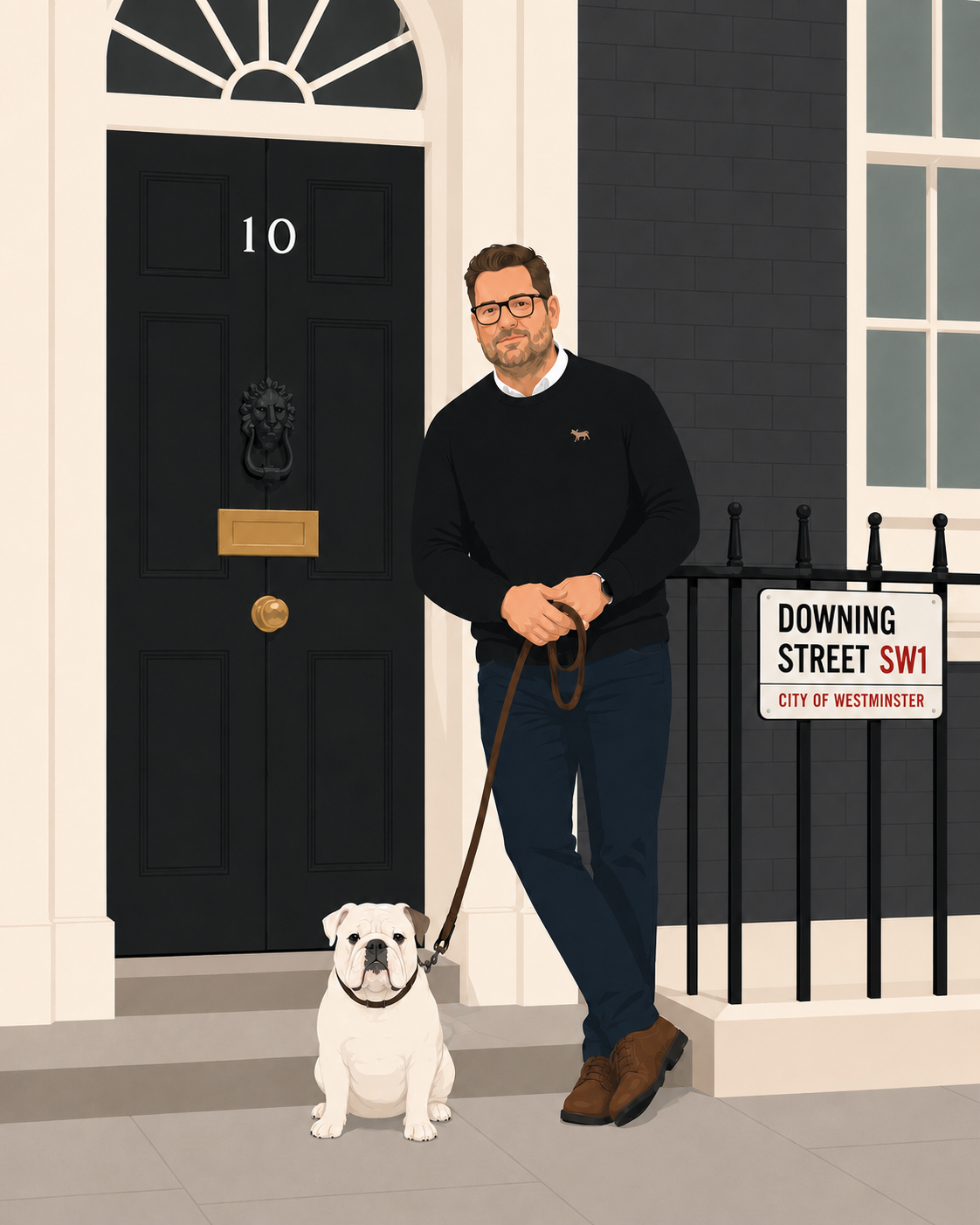
I design neighbourhoods and homes for a living. I'm not a politician, an economist, or a political journalist. I'm an architect from Sheffield who spends too much time thinking about cities, suburbs and villages and not enough time shutting up about it. So take what follows in that spirit.
But here's the thing about designing a neighbourhood. You learn pretty quickly that the bones determine everything. The streets, the public spaces, how people actually move through a place. Get that wrong, build a maze of cul-de-sacs with no proper connections, and the neighbourhood will never function, no matter how nice the individual houses look. You can't bolt a sense of place on afterwards. Britain's bones are wrong. And Andy Burnham, who will be sitting in Downing Street before the end of July, is about to have to decide what he actually does with that.
He'll be Prime Minister. That bit's settled. The question worth asking is what kind of Prime Minister. So if I were him, here's what I'd do.
First, I'd stop letting other people define what this moment is about.
The Westminster conversation right now is all about the mechanics. The numbers. The timing. The positioning. That's the game as the lobby plays it. It's also completely irrelevant to the actual question, which is whether anyone in British politics has the guts to make a long argument.
Not a policy announcement. Not a five-point plan. A Vision. Capital V. A story about what Britain could become if we stopped treating the economy as something that happens in London and occasionally trickles northward.
So what's the Vision? I'd argue it has five parts, and the first one matters more than people realise.
Secure, beautiful homes. This is where I'd start.
Not because I'm an architect, though I am. Not because a good home is the most tangible thing a government can offer someone, though it is. Because there is now serious evidence that the quality and security of where you live shapes almost everything else. Your health. Your kids' educational outcomes. Your willingness to take economic risks. Your basic sense that the future is something to look forward to rather than brace for.
Thatcher gave a lot of people the chance to own a home of some sort. It was popular because it was tangible, people could see it, feel it, hold the keys. But more than the policy, she changed what people believed was possible for them. That shift in mindset, the idea that where you started didn't have to determine where you ended up, was genuinely powerful. Burnham could do the same thing, differently and better. Not just ownership for some, but the chance for everyone to live in a genuinely beautiful, secure home. A new generation believing that a good home is something that happens to them, not just to other people.
I don't care for Thatcher, not one bit. But she created an era in which everyone, however briefly, believed they could have ambition for themselves. Burnham could do that too, differently and better, with homes instead of right to buy.
Since 1989, water companies alone have extracted £85 billion in shareholder dividends from infrastructure that belongs, in any meaningful sense, to us. That money didn't build anything. It left. And the result is sewage in rivers and pipes that leak a quarter of their contents before they reach a tap. Apply the same logic to housing and you start to understand why we are where we are.
I'd commit to building homes that are genuinely good. Not just numbers on a target. Not rabbit hutches near a retail park. Homes in places people want to live, designed with care, tenure-secure, surrounded by the kind of public realm that makes you feel like someone gave a shit. Because the evidence is unambiguous: secure, beautiful housing improves wellbeing. And improved wellbeing is not a soft social outcome sitting alongside the serious economic ones. It is an economic input. Full stop.
An optimistic society, one where people feel secure and can imagine a better future, is a more economically active society. This is where I'd start, and it's where I'd keep returning, because it's the thread that runs through everything else.
The second thing I'd do is make the energy argument properly, which nobody has.
Britain has an extraordinary offshore wind resource, a serious head start on AI safety regulation, and a national grid that, with the right investment, could be running on clean domestic power within a decade. That's not an environmental pitch. That's an energy security pitch. An economic competitiveness pitch. The industries of the next thirty years, AI computing resource, advanced manufacturing, green hydrogen, are ferociously energy-intensive. The country that can offer abundant, cheap, clean energy will hoover up those industries. Why isn't that us?
I'd set up the infrastructure to make it us. GB Energy, already exists, scale it. Green investment as the organising principle of the Treasury. Long-term borrowing against long-term returns. And yes, the debt is real. But you borrow to consume or you borrow to build. The NHS was built on borrowed money against a future that repaid it many times over. Same logic applies here. The question is never whether to carry debt. It's whether the debt compounds into something worth having.
Third, I'd make the AI argument, and I'd make the phone calls.
The UK has something genuinely rare right now: credibility on AI safety. The AI Safety Institute, the research depth, a regulatory instinct that's serious without being paralysing. Frontier AI companies are having a difficult time in the United States. The right offer, long-term, credible, backed by cheap green energy and serious co-investment, could make the UK the obvious home for AI development the world can actually trust. That's a real pitch. I'd be making it personally, to the right people, fast.
Fourth, infrastructure. And this is the one most governments get backwards.
We've spent decades arguing transport investment on journey times. Twenty minutes off a commute, that sort of thing. It's the wrong argument and always has been. The actual case for serious mass transit, rail, bus and tram infrastructure, is agglomeration. Dense, well-connected places are more productive because of how talent and ideas collide at proximity. Properly connect Manchester, Leeds, Sheffield and Liverpool and you don't just save people time, you make them function as a single economic zone. Nobody ever argues it that way. Nobody ever makes the emotive case.
Your daughter is brilliant. She grew up in Barnsley or Preston or Stoke. She came home after university because she loves where she's from. She's doing a job that doesn't come close to using what she's capable of. That's not her failure. That's a forty-year infrastructure failure. Transport, data, broadband, computing capacity in the regions. Fix the infrastructure and you unlock talent that's been sitting there, wasted, the whole time. That's not a northern chip on the shoulder. That's an enormous, recoverable productivity loss. Invest now, properly, for the long term, and you get decades of return. Keep cancelling and shrinking everything at the first sign of a tricky headline and you get what we've got now.
Fifth, and I'd weave this through everything rather than saving it for last: wellbeing is the point.
Mental health services that arrive before crisis. Social care that treats vulnerability with dignity. Education that opens rather than sorts. And homes, back to the homes, that are secure and beautiful and surrounded by communities that feel cared for.
And I mean everyone. A genuinely optimistic society is one where everyone gets to participate in it without fear. Where anyone can use a public toilet without it becoming a national political argument. Where young people grow up seeing themselves reflected in the places and institutions around them, rather than feeling like they're tolerated at best and targeted at worst. This isn't a culture war point. It's a wellbeing point. Anxiety, exclusion and fear are enormous drags on human potential. You cannot build an optimistic country while a significant part of the population is spending energy just trying to exist safely in public space. That's a waste. It's also just wrong.
An optimistic country is a productive country. A society where people feel like they have a future invests in it. This is not soft. This is the whole argument.
Look. I'm an architect. I think about neighbourhoods and what makes places work. And what makes places work, what makes them genuinely alive and economically vital, is almost never what the economists say it is. It's whether people feel at home in them. Whether they can imagine their kids growing up there. Whether they feel like someone, somewhere, thought about them when they made the decisions that shaped the place.
Britain has had forty years of decisions that didn't think about that. Andy Burnham is from the north, ran a city, and made it work better. He is probably the only senior politician in the country who can stand in a room in Wigan and a boardroom in Canary Wharf and make the same argument land in both places.
He's got the moment. He's got the argument. He's got the political gifts to make it land.
Now let's see if he's got the nerve.
Phil Cooper is a director at Hope Architects, a Sheffield-based architecture practice. He designs neighbourhoods and homes, thinks about cities, suburbs and villages for a living, and apparently can't stop doing it in his spare time either.