The architect you'll soon have to hire
Last December the president of the RIBA, the professional body for architects, announced he would not be renewing his registration with the Architects Registration Board. The detail matters, because under the Architects Act 1997 only ARB-registered individuals can call themselves architects in this country. So from this year, the president of the RIBA cannot describe himself as an architect. He has not stopped doing the work, of course. He has stopped using the word.
That sounds like inside-baseball, but it is the cleanest way to understand what is happening in my profession right now, and why developers should be paying attention. The RIBA's argument, which the ARB has been quietly making to government for more than a year, is that title protection on its own is meaningless. Anyone can do the work of an architect in the UK as long as they don't use the word. What both bodies now want is protection of function: a legal requirement that certain activities, full planning submissions, building control applications, final compliance certificates, can only be carried out by registered, competent professionals. The Single Construction Regulator consultation is open. The government's call for evidence on built environment reform is due this spring. The ARB's new five-year strategy, published in February, commits to reviewing the entire regulatory model. None of this is settled. All of it is moving in the same direction. When this lands, the developers I work with will, by law, have to use a registered architect for the activities that determine whether their schemes get the green light.
I want to make two arguments about this, and I expect to upset some of my own colleagues with the first one.
The first is that the safety case for function regulation is weaker than the institutions making it want to admit. Grenfell, the trigger for all of this, had architects on board. The vast majority of safe, well-built homes in this country are produced every year without an architect being involved at the planning submission stage. I have worked alongside CIAT technicians, housebuilder design managers, technologists, and veteran in-house teams whose technical competence, professionalism, and care for the buildings they deliver matches or exceeds plenty of registered architects I could name. Pretending that a registered title is a proxy for safe outcomes is not honest. It is institutional positioning dressed up as public interest, and developers reading the RIBA's press releases are right to be sceptical of it.
There is a deeper problem with the regulatory move, which is that the activities being reserved are, frankly, the activities where the gap between a good architect and a competent technician is smallest. Producing a full planning submission, drawing a building control package, signing off compliance: this is work that a well-trained technologist or experienced in-house designer can do perfectly well, often more efficiently than an architect would. Regulating these activities to architects only doesn't make the work better. It makes it more expensive. The RIBA and ARB are quietly reserving the wrong end of the process.
So if function regulation is coming anyway, and the regulated activities aren't really where architects add their distinctive value, what is the developer being asked to pay for? And, more usefully, what should they do about it?
This is where the second argument starts, and it is the one developers should care about. If you are going to be forced to bring a registered architect into your scheme for the technical submission work, the only sensible commercial move is to use that appointment to access the work architects are actually trained to do. Because that work is not where the regulators are looking. It sits upstream of the planning drawings, before the brief is locked, before the unit mix is fixed, before the site has even been properly read.
What a good architecture school teaches, at its best, is not building design. Building design can be learned on the job, and increasingly it can be learned from software. What the best schools teach is a particular kind of thinking. Masterplanning, the ability to read a site at the scale of a neighbourhood rather than a plot. Non-technical site analysis, the kind that notices the desire lines, the views people actually use, the social and physical geography of the place rather than its red-line boundary. Brief interrogation, the willingness to ask why a developer wants 180 units of this mix on this site before working out how to draw them. Problem-framing, the discipline of asking why before how. None of this is technical work. None of it is what function regulation is reserving. All of it is the work that determines whether a residential scheme gets permission, gets built, and gets sold or let at the top of its local market rather than the bottom.
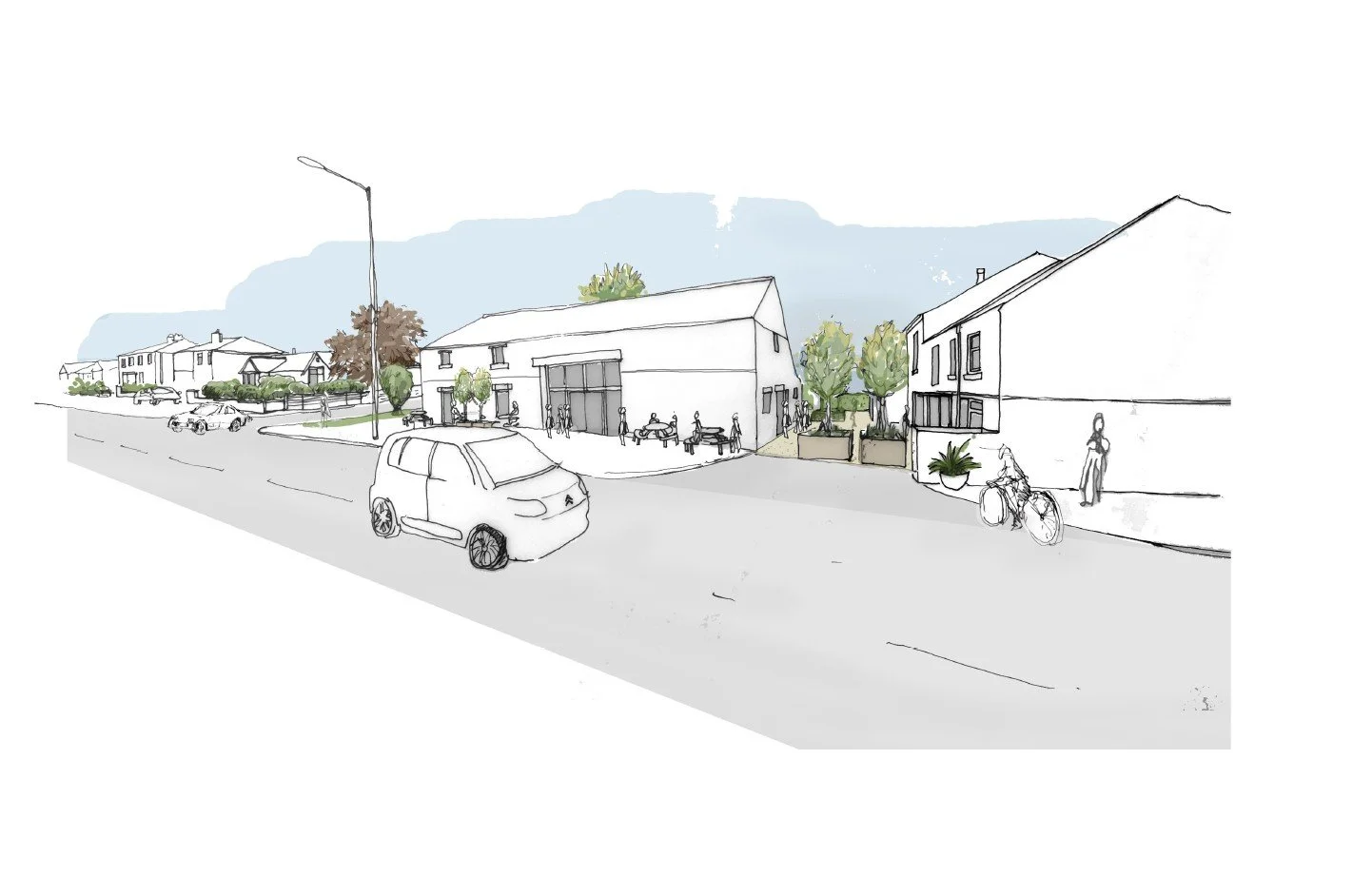
Hope Architects
The stalled residential schemes I get asked to look at, the ones that have been refused, redesigned, refused again, and quietly shelved, almost never have a technical problem at root. They have a thinking problem. Somebody, years earlier, accepted a brief without asking the wider question of what the site was actually for, and the submission has been loyally trying to deliver that unexamined brief ever since. Unpick the brief, look at the site at a wider scale, ask the question that wasn't asked, and the site usually has a perfectly viable scheme inside it. It just isn't the scheme that was originally drawn.
So here is the developer's situation as I read it. Function regulation is coming. The safety justification is thin. The cost line will go up. You will, by law, have to bring an architect into work that, in honesty, doesn't really need one. None of that is good news.
But you are about to have an architect on your team whether you wanted one or not. The smart move is to pick one who can do more than the regulated bit. Use the appointment to get the work the regulators forgot about: the masterplanning thinking, the social and physical site reading, the brief interrogation, the discipline of asking why before how. That work is not on the reserved-activities list. It is also the work most likely to offset the new compliance cost several times over, by producing schemes that get permission faster, get refused less, get redesigned more rarely, and perform at the top of their local market rather than the bottom.
Commission the regulated work cheaply, treating it as a compliance tax, and you will get a registered name on a submission otherwise identical to the one you would have produced before, the same stalled-scheme problem you had before, and a higher fee attached. Commission an architect who can do the upstream work as well, and the tax pays for itself.
The cheap architect is about to disappear by law. The valuable one was always available. The question for developers is which one they were trying to buy in the first place.